Showing posts with label Education. Show all posts

Sunday, 2 August 2015

Numeric Math Camp Fun

A few weeks ago, some of my colleagues and I got to spend a morning at the Numeric Math Camp which was held over the course of a week at UCT. We got to interact and chat to learners from Gr 6 - Gr 8 and really had a fun time. 

Numeric is an after school program which uses Khan Academy to expose learners in low income areas to maths and aims to improve maths scores in those areas by focussing on the basics and letting learners go at their own pace. To find out a bit more about Numeric, click here. This maths camp gives some of the top learners in the program a chance to gain some more exposure to maths in a fun and engaging environment and find out why maths is relevant later in life. 

I gave a fun talk on "My Maths Story", where I shared my maths journey. Starting from the age of 16, I explained the impact of Maths and Computer Science on my life and how Maths enabled me to pursue a career in Engineering and Software Development. I also explored the various careers I was interested in over the course of my schooling, illustrating how Maths was required in order to study all of the degrees I was interested in. I explained one or two simple engineering concepts that require maths and finished off with a few maths tips that I have learnt along the way.

It's always a bit nerve-wrecking standing in front of a lecture hall (probably the engineer in me coming out) and I often find that it takes me a few minutes to settle into my presentation and get comfortable in front of a big group of people, but by the time I had established that the majority of these kids knew about the CSI and NCIS TV programs, I had got into my stride and really enjoyed giving the rest of my presentation, you should hopefully be able to click through my presentation below*. The rest of the morning my colleagues played some fun maths activities with the learners, teaching them about binary numbers, the basics of image processing, sorting logic and ordering. 

Numeric also put together a video of their 2015 Math Camp - see if you can spot me!


* I used Prezi to create this presentation, it's a great alternative to Power Point!


~~~~~ Follow Practical Cookie ~~~~~
~ Twitter ~ Facebook ~ Pintrest ~ Instagram ~

Wednesday, 22 July 2015

Quote #2: Man's Mind Stretched...

Practical Cookie Wise Words Wednesdays Week 2
I really love this quote for it's sense of just how much our minds change when they are challenged to literally stretch themselves. It emphasises how important continual learning is and how it can impact our lives.

Recently, I've really been enjoying learning and reading about things that challenge my preconceived notions on certain topics. While not all of the things affect me directly, they affect my perception of a bigger story or let me see an event from a different perspective. As a voracious reader, I've always enjoyed learning from stories and the wonderful ability of stories to let you see one event from multiple perspectives. I also think that seeing a story, whether it's a story in a book or an actual event in real life, from various perspectives is definitely something that helps to stretch your mind.

The other thing that has been stretching my mind recently has been learning new programming skills. I've really enjoyed having a couple of courses on the go and being back in an academic environment and learning these new skills is also helping to stretch my mind and is giving me lots of ideas for other possible applications that I can apply these skills to!

What has stretched your mind recently?


~~~~~ Follow Practical Cookie ~~~~~
~ Twitter ~ Facebook ~ Pintrest ~ Instagram ~

Saturday, 18 July 2015

Project Video Programming Mobile Applications for Android Handheld Systems

Video of final project for the course Programming Mobile Applications for Android Handheld Systems.

I added in an extra feature, just for fun - that of being able to change the colour of the top left block from red to blue, or blue to red.


~~~~~ Follow Practical Cookie ~~~~~
~ Twitter ~ Facebook ~ Pintrest ~ Instagram ~

Thursday, 18 June 2015

What is a MOOC?

Recently, Frosty signed up two programming courses via Coursera. Online learning has been around for a while, but there is a new wave of online learning and online courses. They're called MOOCs - which stand for Massive Open Online Course's and often these types of courses are free. Yes, you heard me right, FREE! Coursera offers courses from Arts to Engineering to Business to Law to Languages. Most of these courses are free, although from the looks of it, there are a few courses (in which you get a "Verified Certificate") that you would need to pay for. If you're looking to expand your knowledge on something, I would suggest you give them a try!

I thought I would keep Frosty company in a python programming course, which is aimed at beginners who are interested in learning how to program (of course, with a focus on Python). So far it's been a relatively simple intro to programming concepts, but I've been really impressed with the way in which the lecturer (Dr Chuck, as he refers to himself on twitter) has presented the information. He's one of the first online lecturers that I've felt a rapport with and he's simplified things down to the basics... Well, the basics from my point of view. Then again, I started learning to code in Grade 10 which was 10 years ago now!

The second course that Frosty and I are taking is a course that is, hopefully, going to teach us the basics of programming Android Apps. I have a feeling that this is going to be a lot more challenging, but I'm really looking forward to getting started and broadening my programming skills and knowledge, so watch this space, maybe you'll see a Practical Cookie app hit the Google Play Store in the not too distant future!


~~~~~ Follow Practical Cookie ~~~~~
~ Twitter ~ Facebook ~ Pintrest ~ Instagram ~

Wednesday, 22 April 2015

How Time Flies

I still almost can't believe that I'm going into my fourth year of working. It feels like the time between graduating and now has gone double or triple as fast as the time between 1st and 4th year at University. 

This really hit home on Saturday when I spent the majority of my day at a workshop hosted by EWBSA (Engineers Without Borders South Africa) for the UCT Student chapter, which had the aim of exposing the students to the EWBSA Project Methodology. There were about four of us who attended as not so recently graduated, working professionals, there to observe and chat with the students about our experiences in the working world.

It was great to be able to interact with these students and find out a bit more about the projects that they had planned for the year. We also had some interesting discussions on some of the more intangible, but nevertheless important, aspects of project management, such as how one keeps their project team motivated and the importance of defining your project correctly. 

On a personal level, it gave me an opportunity to reflect on what I have learnt since entering the working world and compare what I knew straight out of varsity with what I know now. Even though it feels like just yesterday that I graduated, I've definitely learnt a bit since then and have grown in my professional capacity. It also freaked me out a bit to think that the second years that I met would have been in Grade 7 when I was in matric - too crazy for words, surely I'm not that old?!

And on that note - I hope you all have a great week. My project at work has just stepped up a notch into the stage of "crikey, we've got 3 weeks of development left before we have to start testing" phase, so I'm going to be putting in some extra hard work before I leave for Namibia on Friday and be ready to work hard again when I get back next next Monday. If I get a chance, I'll be posting some pictures on Instagram and Facebook - so follow me if you want to see what we're getting up to!

Our camping box all packed up in preparation for our
Namibia trip!


~~~~~ Follow Practical Cookie ~~~~~
~ Twitter ~ Facebook ~ Pintrest ~ Instagram ~

Sunday, 29 March 2015

Biomimicry Course Assignment 1: Naturalist Lens

Assignment 1: Naturalist Lens

Where is your place? Did you name it?For this first observation I sat beneath a tree in the gardens of my block of flats (see picture below, it's unfortunately sideways, so you will need to turn your head). I found a bunch of busy ants that looked like they were scouting out new places to live and perhaps excavating a home within the trunk of the tree. (See my writing below)
What is 1 thing that you noticed during your observation that you’ve never thought of or seen before?When listening to the wind, it blew in a periodicity that emulated the sound of waves at the beach and I wondered about the "frequency" of wind gusts - are they regular, are they similar to the periodicity that we find in ocean waves? 
What was the hardest part about doing the observation for you?Finding the time to get outside to actually do the observation as it's been an incredibly busy week.


~~~~~ Follow Practical Cookie ~~~~~
~ Twitter ~ Facebook ~ Pintrest ~ Instagram ~

Online Learning and Biomimicry

Online learning is starting to become a bigger and bigger platform as time goes by. From free learning platforms such as Khan Academy, that lets you choose to practice a variety of skills, to websites dedicated to various, more specialised courses (such as the CS-101 course I took through Udacity, back when it was free), if you keep your eyes open, you can find the most incredible courses.

At the beginning of this week, I started a one month (free) course offered by an online learning platform called Canvas,  on an introduction to a topic that goes by the name of Biomimicry. This is something that I've been passively checking in on every now and then but is a concept that I really like. In a nutshell, and to use the words of the women who is the primary force behind Biomimicry, Janine Benyus, 


The idea, in the broadest sense, is that that one observes how nature solves a particular problem and then uses the insight gained by this and applies it to the problem that you're trying to solve. The key here, is that you emulate a solution on three different levels - on natures form, on natures process and finally, on natures ecosystem. 

I'm still in the early stages of the course, but I'm really looking forward to learning more about this topic and I thought that, since it's only the first week, if anyone who reads this blog was interested in joining me, you can click on the link here and also enroll for free!

There are so many different online learning platforms, here are a list of ones that I'm familiar with (some of them I've tried out, some of them I've heard good things about), just in case you'd like to check out the world of online learning for yourself!

Udacity
Codecademy
Excel With Business
Khan Academy
Canvas
Coursera
edX
Crash Course


~~~~~ Follow Practical Cookie ~~~~~
~ Twitter ~ Facebook ~ Pintrest ~ Instagram ~

Friday, 22 August 2014

Defining Decade and Being A Twentysomething

I'm sure by now, you all know that I love myself a good TED talk, so when I came across this talk in my facebook news feed, I thought I would take a look. It seemed relevant to me. I'm a twentysomething. I find the media's my peers general public's trivialisation of the twenties years frustrating sometimes. Every day there's another facebook post popping up about why The twenties are the best times of your life. Thirty things to do before 30. They're entertaining up until a point. Taken with a pinch of salt, they're fun. But not for one second do I believe that they're really true. Take a look at the talk below. 

Meg Jay: Why 30 is not the new 20.


The twenties is a big step up from varsity. You need to start growing up. You need to start thinking about things you didn't necessarily have to worry about before. You have to start dealing with rent. And a job where you probably know nothing. And maybe you will probably paying off some sort of debt, maybe multiple debts. You dive into a world full of unknowns and somehow you need to start swimming before knowing how to float.

For many twentysomethings, even though you have a piece of paper behind your name (degree, diploma, course certificate), you have to start out life on a salary (if you're lucky!) that can barely cover your rent, let alone debt repayments and grocery bills. And if you're not getting paid a salary, you're expected to be appreciative of an unpaid internship that allows you to get experience so that you can get a paid job. 

No wonder twentysomethings don't want to grow up. It's expensive to grow up. But it's more expensive not to grow up! After watching Meg Jay's Ted Talk, I actually went and read the book that her talk is based on - The Defining Decade by Meg Jay. She speaks so much sense and puts into words, thoughts that have been roaming in and out my head for the better part of a year. She also (and this is the kicker) explains WHY twentysomethings sometimes find growing up difficult. She also explains that it's normal for the twenties to be a time of feeling unsure, insecure and uncertain about your future. And it's precisely because you're feeling these things that it's the perfect opportunity for you to grab on, persevere and grow into the adult that the twentysomething years should be moulding you into.

Friends, family, strangers reading my blog for the first time, twentysomethings, pre-twentysomethings, post twentysomethings  - I really do recommend that you read this book. And once you've read it, please let me know what you think.


~~~~~ Follow Practical Cookie ~~~~~
~ Twitter ~ Facebook ~ Pintrest ~ Instagram ~

Sunday, 1 June 2014

Can We Afford to Not Design For People?

At the beginning of this year, Frosty and I were approached by one of our friends, asking if we would be interested in getting involved in starting up a Western Cape Chapter of Engineers Without Borders South Africa (EWB-SA). This is something that I'm so SO excited about and I will definitely keep you informed on how things go with getting things off the ground.


As one of our first major team-buildings we are going through a 7 (ish) week course that is all about Human Centred Design (HCD). This is a free course that is offered by +Acumen, which is a branch of a non-profit organisation who aim to tackle the issues of poverty in a way that is most beneficial to the people who are being helped.

The first session got off to a great start. It definitely opened up our eyes to how difficult it can sometimes be to obtain a solution to a seemingly simple problem that will be used by the people you're designing the solution for. I think one of the biggest thoughts that it triggered in me is:


In our communities, businesses and own lives, how can we
ensure that our objective "people oriented" design?


It's a question aimed to spark discussion and thinking. I don't know the answer. What do you think?

I've only had a chance to breeze through the rest of this course, but let me tell you, I think it's going to be amazing! Looking at design from a more "human" perspective is something that has always fascinated me.

As engineers* we are so often told that we were taught to think. But thinking only gets you so far. Often, designs are brilliant, but don't get adopted by the people they were meant for because of some small factors that have a huge impact. I'm really hoping that this course will help me both personally and professionally. By the end of it, I hope my design thinking has been broadened and I will be able to come up with designs that make people happy.

*We have two guys with non-engineering BSc degrees as part of our team and interestingly, they ARE taught to design things with people in mind a lot more than engineers are. I find it incredible that this is the first time we've had these types of discussions with them, seeing that I've know these guys since 2nd year! I can't wait to see what else we'll be learning with this!


~~~~~ Follow Practical Cookie ~~~~~
~ Twitter ~ Facebook ~ Pintrest ~ Instagram ~

Monday, 20 January 2014

TED Talk - Robots With Soul

My weekly TED Talk arrived in my inbox this morning. It's a talk given by Guy Hoffman and it gives a background on his journey with animation and how he creates robots that are less like robots and more like people. This talk really appealed to the engineer in me, as well as the creative in me! 

Here's his talk. Enjoy!


For more interesting talks - click to visit* the TED website. You can sign up for daily or weekly talks that will challenge conventional thinking and expose to you many different, interesting people and their work, beliefs, callings and research. 

*Please don't blame me if you use up your monthly/weekly/daily allowance of bandwidth watching TED Talks! :)


~~~~~ Follow Practical Cookie ~~~~~
~ Twitter ~ Facebook ~ Pintrest ~ Instagram ~

Tuesday, 26 November 2013

Goldiblox Toys


A friend forwarded me an awesome advert for Goldiblox - engineering toys for girls! I'm all for encouraging more ladies to enter the more technical professions, and I absolutely LOVE this concept!

Started by Debbie Sterling, a mechanical engineer by trade, these toys and books encourage young girls to explore engineering concepts with toys that are slightly more attractive than the leftover Lego blocks from my boy cousins that I used to play with as a kid.

Hopefully we'll see these hitting the shelves in South Africa at some time!


~~~~~ Follow Practical Cookie ~~~~~
~ Twitter ~ Facebook ~ Pintrest ~ Instagram ~

Saturday, 9 November 2013

What's Your Closet?

Have you ever watched TED Talks? They're short 5 - 20 minute talks given by people on every single topic under the sun. Some of them are scientific. Some are funny. Some display skills that blow your mind and some relate advice for living life and being awesome. They generally leave you inspired and mind-blown! Yesterday I watched one given by Ash Beckham, take a look at it here.

If you're too lazy or don't have a good enough internet connection (the joys of living in Africa) here's a summary:

Ash compares all difficult conversations or situations to coming out the closet. She knows about these difficult conversations, as she literally had to have her own difficult conversation when she admitted to her family and friends that she was gay. She urges people to stop ranking their difficult conversations, trying to out-do each other in "hardness". Difficult conversations are hard, full stop. She recognises that whatever closet you come out of, you will be challenged and you will need to take a dose of courage to do it. She encourages us to sympathise with others, instead of judging them as every single person has their own closet to come out of. 

She shares some awesome bits of advice, that all came to her after an interaction with a little girl at the diner that she worked at. This little girl asked her whether she was a boy or a girl and even though she was ready to go all hardcore lesbian on this tiny little girl, she instead gave her the answer that she was more of a comfy pj's girl than a pink dresses girl. The little girl responds by describing her own pj's and then asking for her pancakes. Easiest hard conversation ever.

And the advice she gives when you have to have a hard conversation of your own?

1. Be Authentic
2. Be Direct
3. Be Unapologetic

I think it's definitely advice we can all relate to. She finishes off by encouraging people to never apologise for being true to yourself. Any expectations that others have of you, are ultimately their expectations of you. And if the reality does not live up to their expectations then they need to manage their expectations of you, as long as your expectations of yourself allow you to stay true to who you are. 

When having difficult conversations of my own, I've found that the easiest difficult conversations have always been ones in which I've followed the advice above (or when others have followed that advice with me). Be sensitive to the way that you convey your information, but don't pussy-foot around something so that by the end of the conversation you don't actually know what the point was - you'll just have to have that conversation all over again.


~~~~~ Follow Practical Cookie ~~~~~
~ Twitter ~ Facebook ~ Pintrest ~ Instagram ~

Monday, 21 October 2013

Grad Learnings

Last year I was part of a graduate program with my company. It introduced us to the complexity of supply chain and also aimed to give us broader business exposure. This year I have been part of the organising committee for the current grads and it's been an awesome experience. Last week we held our last grad event for the year.

At 4:30 last Tuesday morning I dragged myself out of bed so that I could get started with lifts to the airport for two of my grad friends. When we got there the whole of OR Tambo carousel had broken down and everyone's bags were piling up at the check in counters. I felt sorry for the poor guys who had to fix that broken carousel - they would have been feeling the pressure even more than our guys do when one of our conveyors breaks down!

Anyway, we got to Durban in one piece. I would really like to give credit to ACSA and all the airlines - even though our bags didn't come with us on the plane, our details were noted down and they were delivered to our hotel later that morning.


For the first day, our grads had the morning to finalise their business case presentations that they had been working on for the last month or so. We then went to another venue where they presented solutions to current issues in our company to members from the senior leadership team. They did a lot better than our group last year - we were told to go back, re-think our presentations and do them again in two weeks. This year they were much better prepared - mainly due to the horror stories and threats that they had been told by myself and the other committee members. 

There were very good questions asked by the leadership team at the presentation. The learning that I took away with me this time was to take a look at how leaders can remove complexity from their business. How can you use current tools (or remove tools completely) in order to make your teams lives easier? Perhaps all the tools are there and it's the behaviour that isn't proper. How then can you change behaviour to make the best use of the tools that you have?

On the second day, we visited one of our packaging suppliers and it was awesome to see incredibly different technology at work in their factory. We learnt a bit about the difficulties experienced from their side of the business and of potential areas of improvement between both parties. That afternoon we took the grads back to head office where they were split into teams to do a negotiation role play between a supplier and customer. As most of our grads are engineers and had no clue about how to go about a negotiation, there was a huge amount that all of us (committee members included) learnt from participating and observing the negotiation prac.


What I took away from the prac is that maintaining the relationship and respect for the other party is incredibly important. It's also important to prepare - it was suggested to us that for every hour spent negotiating, you should prepare for 9 hours! You need to be willing to compromise on some things in order to gain advantages somewhere else. You also need to be strategic on the points that you negotiate on - it's very difficult to negotiate on labour and fixed costs. Rather pick things where for a seemingly insignificant decrease/increase you get a larger reward.

That night the committee had a close off event. All I'll say it that it was amazing. And all of us may or may not have felt tender for the whole of the next day...

We had a fear factor food race- split into 3 teams
and 3 different foods - I got the chicken feet as my dish...
Luckily there was some traditional Zulu beer to act as a
chaser afterwards! 
On the last day we had a visit to a factory that manufactures specific types of parts for the motor industry and it gave us a chance to see a different type of manufacturing and supply chain process. To end off the day we had a close off lunch with everyone, got feedback on the program and we gave out a few awards. We got such positive feedback from the grads this year and I hope that next year it's even better for them!

And to my fellow committee members - it's been such a pleasure and I'm going to miss all of you and my excuse to come and visit Durbs next year!

Grads bonding over a drumming session at the
close off event while committee wrapped up award nominations


~~~~~ Follow Practical Cookie ~~~~~
~ Twitter ~ Facebook ~ Pintrest ~ Instagram ~

Tuesday, 15 October 2013

Post-Its and Papered Walls

I completed a 3 day planning workshop for a major, complex project we're about to launch at our factory. Wow. By the time we had finished, the pristine white sheets of paper that we had stuck over the walls and windows of our room had become littered with coloured post-it notes and kokie lines. I now view post it notes, markers and white sheets of paper stuck on walls in a whole new light.

I know a lot of people (especially a few of my girl friends) love to use post-its to place in their diaries, on their fridges and as quick thank you notes to friends. I've come to see this as a conventional use of post-its. 

This week, myself and the guys (yes, all the rest of the team were guys) spent time classifying and writing big tasks on post-its, then breaking up the big tasks into smaller tasks and writing them on post-its. Then breaking those tasks into smaller tasks on post-its. Each post-it had the task, name of person responsible, company, estimated duration and set of 3 or 4 filter "tags" written on it.

Hard at work writing post it notes
Then all the post-its were ordered according to logical sequences and processes and a temporary pencil line was added in to show the link between tasks. Each post it and all the accompanying information was then captured on to the computer as part of a database. During capturing, each note was given a corresponding number (according to the database number on the computer) and a red dot, to indicate it had been captured on the computer. Notes with a blue dot were used to indicate a delivery of something. Then processes were linked, and during this time, a blue line was drawn indicating links between the different tasks. By the end of our 3 day period, we had something looking like the below image and an ultra complicated project breakdown.


Discussing process and logic sequences

Part of our final project plan according to post-its

I've never been part of a big project planning session and this was an extremely enlightening exposure to an amazing project planning technique and tool. For the new people (like myself), our facilitator's aim was to ensure that we understood the project planning process so that going forward, we can facilitate other project planning sessions. I'm sure that I will be able to use this tool going forward, as it's applicable to all projects, not only engineering ones. However, this is only the beginning and our facilitator will have regular check-in sessions with us to track our progress and I'm sure there's still a lot to learn from him about the project planning process.


~~~~~ Follow Practical Cookie ~~~~~
~ Twitter ~ Facebook ~ Pintrest ~ Instagram ~

Monday, 14 October 2013

Old Girls Drinks and Nostalgia

A little while ago I went to an old girls drinks in Joburg and it was the first time since leaving school that I've been in a room packed to the brim with females since I left high school. I've been out of high school for a longer (only by a year) period of time than I was in high school. 

Wow. I had forgotten what it's like to be in an estrogen storm. High pitched squeals and chatting at speeds that would put an F1 driver to shame. I remember that guy friends from our brother schools would stare in confused bewilderment as girls from school chatted so quickly that after 5 minutes they had no idea what we were actually talking about. This time, the only man there was the current headmaster and I hope, for his sake, that he has mastered the technique of speed listening.

There were about 15 or so of the girls from my year there and it was awesome to see what everyone had achieved. Some were working, some were still studying. Some were working while studying. Girls have matured and life has happened, but underneath the more "grown up" exteriors, I could still see glimpses of the girls I went to high school with.

It made me nostalgic. For sprawling on a blanket on front lawn during rest. For afternoon sessions - swimming, hockey, judo, golf, music. My friends coming on runs through the vlei - and then bunking out popping in to my house for a cup of tea and chat on the veranda. For those winter mornings before Chapel, standing outside bundled in a scarf and padded jacket, breathing out white clouds and warming each others hands. 


St Anne's swimming team
Typical swimming events - cold and miserable
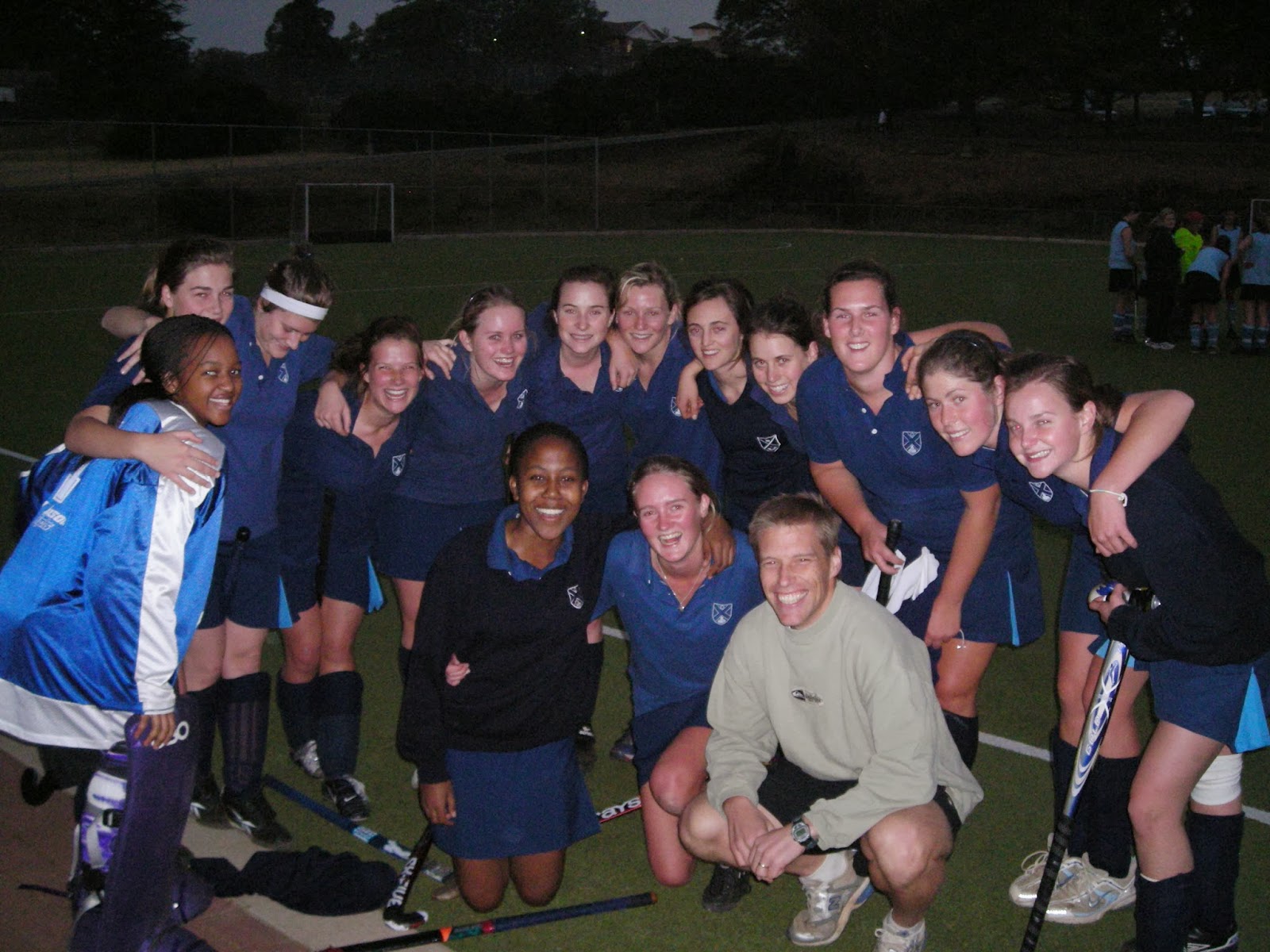
Hockey Team and coach

St Anne's Chapel
Chapel
Monday morning art sessions where, if you listened, you heard all the gossip from the previous weekend. For our start of the year "all-girls" social where 2nd formers were introduced to the school spirit and general craziness. For DMCs and sharing dreams for the future. For end of year Christmas lunch then jumping-into-the-pool-with-blue-dresses-going-mud-sliding. For keeping busy from dawn until dusk. 

Playing dress up on the last day of school
For spending all day with friends. Dressing up for any and all occasions. For house mothers. For awesome teachers who dealt with all the girly-hysteria on a daily basis and carried us though our studies. Prep sessions where old Mrs B could be heard admonishing late-comers throughout the classroom block. And later in the evening, you would hear her heels, click-clacking through the corridors making sure work was being done. Weekend adventures and Friday night SCA sessions in the green shack. 


SCA in the Green Shack
Giggling over boys and peoples latest crushes. Learning to dance for Chanel Ball. The beauty and radiance of matric ball - front lawn covered with girls in white dresses and proud parents taking pictures. 


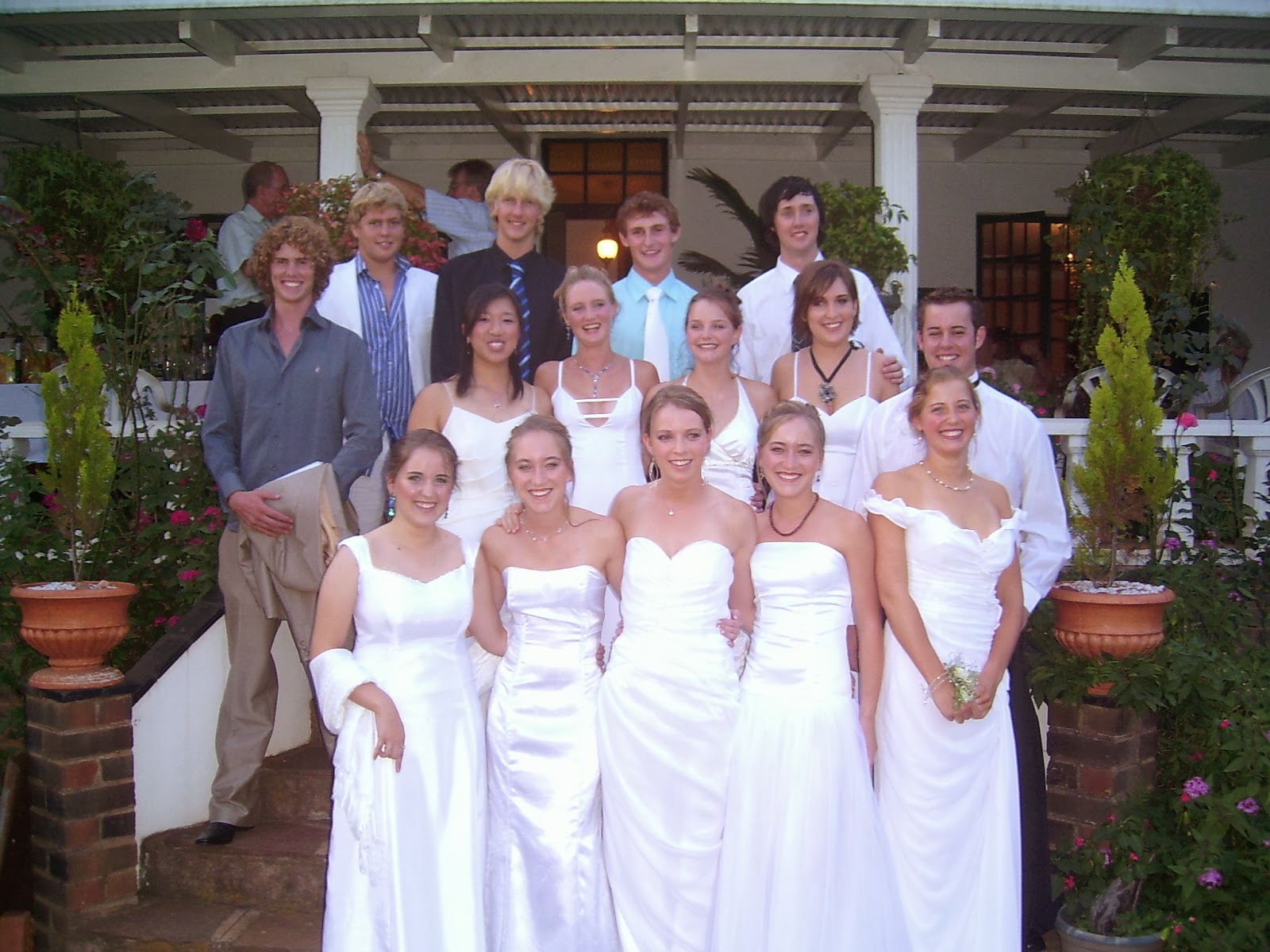
Matric Ball
Girls and partners at pre-drinks at my house
Waitressing at older forms dances - and getting to eat any delicious left-overs. Tea-time snacks. The privilege of being able to go to "The Ville" on free afternoons during the week- and then meeting up with the guys who were there for extra Maths lessons. For the excitement of the big school-boy rugby matches where you went to watch rugby see and be seen. Participating in and observing interhouse events - drama, music, sport, art, public speaking. Interschools newspaper quiz with a winning team combination. For the feeling of possibility and for knowing no limits.


Interhouse music competition


Tea at the Ville
Some sort of fun day
At one of those infamous interschools rugby matches
Chilling on the front lawn
Visitor to the art classroom
Art class antics
Sports dinner
Last day of school


~~~~~ Follow Practical Cookie ~~~~~
~ Twitter ~ Facebook ~ Pintrest ~ Instagram ~

Saturday, 28 September 2013

Interview Types and Tips

Interviews. For anyone looking to be employed by someone else, you will have to go to interviews. My boyfriend is currently going through this whole interview process so I thought I would use the opportunity to share with you what I learnt. During my final undergrad year I went to lots of interviews, so here are some types of interviews you can expect:
  • Assessments - you will have to complete a variety of "tests" and they're usually done by the bigger companies, although some smaller companies may do them too. They test things from how quickly you learn to hardcore technical skills to what type of person you are. Often the tests are annoying. But when I got offered my current job, a complete stranger summed me up in a few sentences which was pretty astounding - so don't assume the tests are irrelevant. They could make or break your chances of getting a further interview
  • Group sessions - in this type of interview you will be put in a room with a bunch of other hopeful applicants and given a case study. Often you are expected to play a certain role and solve a problem. Don't be fooled - it's not about coming up with a peaceful solution to the problem. The assessors want to see how you interact with other people and what sense of business you have and if you're able to look at an issue from a variety of angles. Again, these are usually done when being interviewed by a larger company.
  • Role play sessions - very similar to the group sessions, but this is where you are given a role and told to role play with employees at the company. They will give you a certain situation/case and you may or may not be given time to come up with a game plan before you start to role play.
  • Face to fact interviews - this is where you will generally meet with an HR rep and/or other employees of the company. These are probably the most difficult interviews to prepare for because you can get asked anything. At one interview for a large clothing company, I was asked about their financial report for the year. I didn't get that job. But most face to face interviews are a time to get to know you, they may ask one or two simple technical questions to assess your basic knowledge, they'll want to know your plans for the future. They will probably ask you to tell them a bit about yourself - don't tell them boring things, tell them things that will cause them to remember you.
I've been interviewed and I've also interviewed others and found it really interesting. Here are some other tips I've picked up in the process, or been given by family and friends:

  • If there's no dress code specified on the interview invitation, ALWAYS be smarter than you think you need to be. Even if they give a dress-code, it's always better to look smart, or dress slightly smarter than the dress code stipulates. A scruffy dresser will give a bad impression before you've even opened up your mouth. A professional looking outfit will give people the impression that you're capable and willing to make an effort.

Who would you hire?
An unprofessional imageA professional image

  • Don't mumble or give one word answers. It's difficult to get an impression of someone when you can't understand them or they don't elaborate on a question.
  • Have an idea of a few long term goals that you want to achieve and where you want to be a few years down the line. You may want to live close to your family. You may dream of travelling for 6 months after 5 years of work. Maybe you want to be a manager within x number of years. My long term goals are to pay off my loans and to eventually pursue a masters in biomedical engineering.
  • Who are you? You need to be able to tell the interviewers a bit about yourself. Who is Cath? If you say electrical engineer and stop talking you're not going to get very far. Tell people who you are. What makes you tick? What makes you happy? What makes you annoyed.
    I am an assistant engineer with a year and a half of experience in the maintenance department. I enjoy programming. I enjoy time to myself but I also love to be around my friends and family. I don't give up easily when faced with a challenge. Stupid people really annoy me. In my spare time I enjoy to paint and take pictures. I love seeing what South Africa and the rest of the world has to offer. I work hard, but when I'm not working, I don't want to think about work. Which "Cath" is more interesting to you?
  • Try to give as many real life examples as possible. If you're a graduate, you probably don't have work examples to give. Give examples from varsity or your personal life. Have examples ready for the following types of questions: how do you deal with difficult people? What happens when you don't want to get up in the morning? When did you have to take the lead? What do you do when you try to negotiate something with someone and they won't budge? Give an example of a time you have succeeded and what do you think went right? Give an example of a time you have failed or done something wrong and how did you deal with it?
  • Connect with your interviewers. They're people too and they're looking for people that they like and that will fit in to the current team.
  • Don't EVER tell the interviewer what you think they want to hear. They can smell a phoney answer from a mile away; it sounds incredibly insincere and will probably turn them off you in a heartbeat. Instead, try to structure an answer that you can both work with. Where do you see yourself in 5 years time? If you answer "Working for this company because it's the greatest company ever", you'll probably shoot yourself in the foot. Tell them that you want to be in a management position. If they're an international company, maybe you want to be in a position that allows you to travel a lot. If they're a smaller company, you might want to mention that you're interested in specialising in hardware design and they're a good company to learn hardware design from. There are no right answers. But a sincere answer will go a lot further than a fake answer.
  • Honesty is the best policy. In all my interviews I've been incredibly honest. While I was interviewing I was also planning a trip to the USA for 4 months with Frosty and some friends. I told every interviewer of this up front. I got solid offers from 2 big companies within a day of each other. If they want you, they'll be willing to wait.
  • Treat your interview experience as a chance to chat with people and practice your interview skills. Learn from each interview so that at the next one you can be better prepared. This is your chance to interview the company as well. If, after the interview, you think you wouldn't be a good fit, tell them upfront to disregard you from the rest of the hiring process.
  • Be on time. Your interviewers may be running late. But you must ensure that you're on time to your interview. Take a book to read with you in case there are delays.
  • Think up a few questions beforehand that you can ask the people interviewing you. These questions may get answered during the interview, which is fine. But it's always good to write those questions down and consult them at then end of the interview to make sure everything you want to know is covered as well.
I'm not a professional interviewer and these techniques may not work for everyone. You may get asked a completely different set of questions to the ones listed here. I'm just sharing what I've learnt, the types of questions I've been asked and a few tips from personal experience in the hope that it will help you be prepared for future interviews. If you have examples of other interesting interview questions, please leave them in the comments box below!


~~~~~ Follow Practical Cookie ~~~~~
~ Twitter ~ Facebook ~ Pintrest ~ Instagram ~

Saturday, 14 September 2013

Homeowner 101

When I was at varsity I read a few of the books from the Rich Dad and Rich Women series by husband and wife duo - Robert and Kim Kiyosaki. The two most inspiring books were "Rich Dad, Poor Dad" by Robert and "Rich Woman" by Kim. To learn more about their books and products, you can click here to go to their website. Since then, the idea of buying up property to create cashflow has been ingrained on my mind and I decided that I would buy my own property as soon as it was feasible. 

A while ago, the opportunity came up for me to buy the flat that I have been renting for the past year or so. I hadn't been planning on buying property so soon after starting work so I thought long and hard about the decision, crunched my numbers and decided it would make a good investment. Even though things will be tight for a while, I've taken the plunge and I'm really excited about my decision. I've bought the flat with the idea that I will be renting it out in years to come, when I move out. There was lots that I have learnt through this whole property buying process. You can find some of the key points below, along with the costs that you don't really think to take into account:


  1. You decide at some point that you want to buy property. I was lucky and the opportunity presented itself to me. For other properties I will probably need to search a bit harder. Shop around before deciding on the property - you need to be sure it's the right one for you.
  2. You crunch your numbers and if you can afford it, make an offer on the house. If the seller likes your offer, they'll accept. Otherwise they'll decline and you can make a higher offer or find something else.
  3. You then go to the bank to see if they will loan you the amount you need. For first time buyers you will usually be awarded the full amount of the loan you request. For more experienced buyers they will probably award you less than the full amount and you will have to come up with a portion of the money yourself. You can approach banks yourself about the loan. Or you can get someone called a "bond originator" to do it for you. I got my loan through a bond originator. You don't pay fees to them as (I think) they are paid by the bank. Your estate agent should be able to recommend someone to you.
  4. Your bond (hopefully) gets approved. Then you start getting lawyers involved to help you file paperwork etc etc. This part is quite hazy to me. Usually the seller nominates a lawyer to help with the transfer. Luckily for me my dad is a lawyer and the sellers, at my request, agreed to use him to do the transfer (and thus I was able to save on some lawyer fees there, but apparently they would have been about R10 000).
  5. As this was my first property, I needed to get life insurance organised. Banks do offer up their own life insurance, however, I found my own life insurance privately for about half the monthly amount that the bank was offering me, R140 per month as opposed to R300 per month.
  6. I also dealt with another set of lawyers - I stand to be corrected, but I think they represent the bank - who facilitated the signing of the contract for the loan from bank to me. I had to pay them about R10 000 for the work that they did. I also had to make up front payments for 3 months worth of my rates and levies which came to about R 2000.
  7. After that, there was quite a wait for the papers to be transferred into my name, but finally they all came through. My dad got help from a lawyer in Joburg for this and he also waived his fees, which would have been about R 1700. The bank then contacted me to confirm the date of my first loan repayment, which is near the end of this month. 
All in all, not including my monthly life insurance payment, my fees should have come to R23 700, I was lucky to get away with paying only half of this. However, when you're thinking of buying your first property, I would say try to find out what you'll need to pay in lawyers fees as well. And if you can't find out, use the number above as a guideline (and maybe add a few extra grand, just to be safe).

Now, I'm sure I've left out a whole bunch of details that are important, but it's a long process and these are the things that jumped out at me as being important milestones in the process. The best way to learn is to do. Even though it's scary and huge amounts of money, I think of it as "forced savings" - once I've paid off my flat I'll have effectively "saved" money up to the value of my flat. And if I don't sell my flat, once I've paid it off, any rental income that I get from it, will be mine to use as I like (probably to go out and buy another rental property!).


Snow in Benoni
It snowed last year around about this time!
The door to my flat is at the top, right in the middle.
Ghost wine glass image
Playing with my camera and a wine glass on the walkway/ledge
outside my flat.


~~~~~ Follow Practical Cookie ~~~~~
~ Twitter ~ Facebook ~ Pintrest ~ Instagram ~

Sunday, 8 September 2013

5 TED Talks on Education Part 2

A few days ago I posted on the first TED talk on education. To read more about it click here.

The second TED Talk was by Geoffrey Canada on the difference between the education that rich people get vs the education that poor people get. He also talks about the "schooling business model" and how it's one of the business models that hasn't changed for years, even though year after year, it continues to display exceedingly poor results. Even though he's speaking about the schooling system in the USA, I think a lot of this can be applied in the global context as well.

Sports Dinner school event with my friend Sossy
The idea of failing business models of schools really appealed to me. At school I was one of the lucky kids: I loved to learn, I understood most concepts quite quickly and I came out the other side of the school business model rather successfully. At university things were slightly different - I battled with a lot of concepts and if it wasn't for my group of friends patiently sitting with me, explaining maths, physics and electronics concepts to me, I wouldn't have been able to pass in the amount of time that I did. I suddenly had a new understanding of why some of my high school and junior school classmates weren't all that fond of school and why learning seemed to be a burden to them. 

Some of the guys who kept me sane when stuff made no sense.
For this particular study occasion, we were all confused and lost.
(L-R: Frosty, Russell, Sam and Craig)

Dr. Canada speaks of the schooling system having a "one-size-fits-all" approach. If you're sharp enough to cotton on to the lesson quickly that's great, and if you don't get it, then that's too bad. Many schools continue to do the same thing, over and over again, even though it produces the same bad results. WHAT TYPE OF BUSINESS MODEL IS THAT?! If I had to go to my directors and tell them that I'm going to carry on doing my job the same way as usual, even though it's producing terrible results, I'm sure I would get fired on the spot!

Looking at schooling as a business model, I have to ask, how can we change the schooling system in order to better service our customers? What can we do to ensure that we encourage more kids to see learning not as a burden, but as a blessing?

In his talk, Dr. Canada mentions that there have been studies done that show that poor kids loose ground in the summer time. He mentions that test data for teachers only comes out at the end of the year, after the holidays. And who is really going to look at previous years data. Is there a way of ensuring that teachers get real time data on their kids, as they are getting taught, so that they can see where the trouble points are and try to address them? Better yet, what about giving the kids the same feedback and pointing out the sections where they may need to do a bit of extra work in order to pass that year?

I have no background in education, other than having gone through the schooling system myself. But, from what I can gather from these talks and my own experience, part of the responsibility of the failing business models of schools lies with the custodians of the schooling system. Dr. Canada mentions that at his school they have a network in place which acts like a parent figure to the kids, holding them accountable and pushing them to do better. I think we need more networks like this within our schools. However, it needs to be something that is driven by the old boys and girls of those schools, by the parents of students at the schools, by the community and not by the teachers. 

I was lucky enough to go to a school with a strong Old Girls network. Imagine if all schools had something similar, where past students of the schools mentored and inspired the present day students. Even better, imagine so called "good" schools partnering with the "not so good" schools, sharing resources and mentoring each other.

I don't have the answers to how we can better change our schooling business model, but it's sparked a thought process in me. As Dr. Canada mentions near the close of his talk - by changing and trying new things, its inevitable that some ideas and techniques will fail. But if we don't try something new, we'll never improve on our current model.

In my usual pose when studying and working - on my bed


~~~~~ Follow Practical Cookie ~~~~~
~ Twitter ~ Facebook ~ Pintrest ~ Instagram ~